Last updated: November 19, 2026
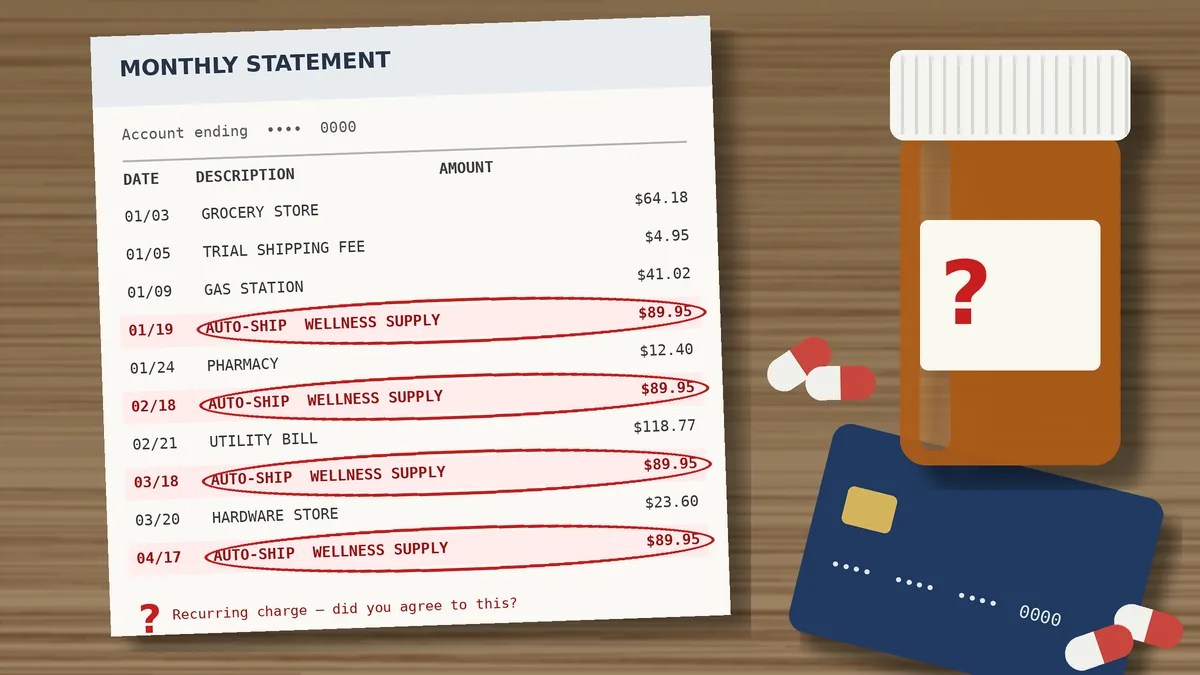
Quick answer: The male enhancement free trial recurring billing scam works like this: you pay a few dollars for “shipping,” and the fine print signs you up for full-price bottles, often $100 or more, plus more shipments every month (BBB). If it has happened to you, cancel in writing, call your card company to dispute the charges, and report the seller to the FTC and your state attorney general. U.S. law says online sellers must disclose the terms, get your consent, and give you a simple way to stop the charges (15 U.S.C. § 8403).
Disclosure: ReviewersFacts.com is reader-supported. If you buy through some links on this site, we may earn a commission at no extra cost to you. There are no affiliate links in this article. Read our full affiliate disclosure.
Some of the most common messages on this site aren’t about whether a pill works. They are about money. Under our Extreme FX spray review, readers describe calling customer service again and again for refunds that never came, and one simply wrote, “Please do not … charge my credit card again.” (We don’t sell the product, so we couldn’t stop it for him.) This guide explains how the charges happen and exactly what to do about them.
How the “free trial” recurring charge works
The details change from product to product, but the pattern is the same. Here is how the trap usually works, step by step.
- The ad. It looks like a news story, a doctor’s discovery, or a celebrity tip. The Better Business Bureau found that many celebrity endorsements on free trial offers are fake, used without the celebrity’s knowledge (BBB study).
- The tiny fee. You’re asked for only a few dollars for shipping, such as $1.95. The FTC’s advice is blunt: if you have to pay shipping or fees to get a “free” trial, it’s not really free (FTC).
- The fine print. Buried in the terms, you may have only 14 days to receive, try, and return the product before you’re charged $100 or more, and you may have also agreed to monthly shipments (BBB).
- The clock trick. California’s Attorney General describes companies that give you 15 days from the “initial ship date” to cancel, then deliver the product after those 15 days are already gone (California AG).
- The add-ons. Pre-checked boxes or a second “bonus” product can enroll you in more monthly charges you didn’t know about (California AG).
- The cancellation maze. The phone number is hard to find, nobody answers, or refunds are always “being processed.” BBB says many people find it hard to reach the seller to stop the charges and get their money back (BBB).
Mail-order promotions add one more problem: there may be no website to check the terms at all. When we reviewed the Confidex mailer, the company gave only a post office box and had no website, so there was nowhere to read the fine print before handing over a card number.
The losses add up. In its study, BBB counted 36,986 complaints and Scam Tracker reports about free trial offers over three years, with an average reported loss of $186. It also found that losses in FTC cases of this type over ten years totaled more than $1.3 billion (BBB).
Is this legal?
Free trials themselves are legal. Hiding the catch is not. The Restore Online Shoppers’ Confidence Act (ROSCA) makes it unlawful to charge you through an online “negative option” offer unless the seller:
- clearly discloses all material terms before taking your billing information,
- gets your express informed consent before charging your card or bank account, and
- provides a simple way to stop the recurring charges (15 U.S.C. § 8403).
You may have heard about the FTC’s “click-to-cancel” rule. A federal appeals court vacated that 2024 rule, and in February 2026 the FTC formally restored the older version of its Negative Option Rule (Federal Register, Feb. 12, 2026). ROSCA is a law passed by Congress, so it was not affected. Some states add their own rules. California, for example, requires companies to clearly explain automatic renewals and get your approval first (California AG).
What to do if you’re already being charged
Act quickly. Some of your rights depend on deadlines.
- Gather your records. Save the order confirmation, any emails or texts, screenshots of the order page, and every statement that shows the charge.
- Cancel with the company, in writing. Call if you must, but follow up by email or letter. The FTC says to keep a copy of your cancellation request plus notes on every call: the date, who you spoke with, and what they said (FTC). Ask for a refund and a confirmation number.
- Call your credit card company. Tell them about the problem right away. To protect your legal rights, also send a written billing error notice within 60 days after the charge first appeared on your statement. The card company then has 30 days to confirm it got your dispute (CFPB). Send it to the billing-dispute address, which is often different from the payment address.
- If you paid by debit card or bank account, revoke permission. Tell the company, then your bank, that you are taking away its authorization to debit your account, and follow up both calls in writing. After that, any new payment the company takes is an error you can ask your bank to refund. Your bank may also suggest a stop payment order, which usually costs a fee (CFPB).
- Dispute every charge that slips through. If the company keeps billing you after you cancel, the FTC says to file a dispute, also called a chargeback, with your credit or debit card company (FTC).
- Report it. File with the FTC at ReportFraud.ftc.gov, your state attorney general (find yours through the National Association of Attorneys General), and the BBB (complaint or Scam Tracker). Reports matter: BBB says the FTC often finds that dishonest companies give refunds only to people who complain to BBB or law enforcement (BBB).
- Watch your statements for the next few months, and dispute any new charge from the seller right away.
Checklist: before you enter your card number
If you are still tempted by a trial offer, run through this list first. If you can’t tick every box, don’t order.
- ☐ I found the terms and conditions and read them. (FTC: if you can’t find or understand them, don’t sign up.)
- ☐ I know how long the trial lasts and whether the clock starts when I order, when it ships, or when it arrives.
- ☐ I know the full price after the trial and how often I’ll be billed.
- ☐ I know exactly how to cancel: phone number, email, or online link.
- ☐ I unchecked every pre-checked box.
- ☐ I searched the company name with the words “scam” and “complaint.”
- ☐ The company lists a real name and street address, not just a P.O. box.
- ☐ I took a screenshot of the order page and terms.
- ☐ I put the cancel-by date on my calendar, a few days early.
Your options compared
| Option | What it does | Timing | Best for |
|---|---|---|---|
| Refund from the seller | Seller cancels and returns your money | Depends on the seller’s policy | Companies that actually answer |
| Credit card billing dispute | Card company investigates and can remove the charge | Written notice within 60 days of the statement | Charges you didn’t agree to |
| Revoke authorization / stop payment | Stops future debits; later debits become errors your bank can refund | As soon as possible; stop orders may carry a fee | Debit cards and bank accounts |
| Report to FTC, state AG, BBB | Creates a record and can lead to action against the seller | Any time | Everyone, in addition to the steps above |
The health side: what’s actually in the bottle?
Losing $186 is bad. Swallowing an unknown drug can be worse. The FDA warns that many products sold for sexual enhancement “are likely to be contaminated with dangerous hidden ingredients,” and that a product’s absence from its warning list “does not mean it is safe” (FDA). The FDA also does not approve dietary supplements for safety or effectiveness before they are sold (FDA 101: Dietary Supplements).
If you took a trial product and felt unwell, stop taking it, get medical advice, and report the reaction to the FDA, as the agency recommends.
Talk to your doctor. The NIDDK advises against ordering an erectile dysfunction medicine online before talking with a health care professional, and says to tell your doctor about every supplement you take, because they can interact with other medicines (NIDDK). Proven treatments exist, and a doctor can tell you which ones are safe for you.
Spot the ad before it bills you
Most of these traps start with a too-good-to-be-true ad: a “doctor” with no last name, perfect testimonials, a fake news page. Our guide on how to spot fake male enhancement testimonials walks through ten red flags. If a product you’ve never heard of is billing you, tell us about it. Readers’ reports are how many of our reviews get started.
FAQ
Can I dispute a charge for a free trial I forgot to cancel?
You can try. Ask the seller for a refund first. If the terms were hidden or you never clearly agreed to recurring billing, call your card company and send a written billing error notice within 60 days of the statement showing the charge.
Will canceling my credit card stop the recurring charges?
Don’t count on it, and closing a card doesn’t cancel the subscription itself. Cancel with the company in writing, tell your card company you no longer authorize the merchant, and dispute any charge that still appears.
How do I stop recurring charges on my debit card?
Tell the company, then your bank, that you revoke permission for automatic payments, and confirm both in writing. Any later payment from that company is an error you can ask your bank to refund. A stop payment order may cost a fee.
Is a free trial that keeps charging you illegal?
It can be. Under ROSCA, online sellers must clearly disclose the terms before taking your billing information, get your express consent, and offer a simple way to stop recurring charges. Hidden terms or no way to cancel may break that law.
Where do I report a male enhancement free trial scam?
Report it to the FTC at ReportFraud.ftc.gov, your state attorney general, and the Better Business Bureau. If the product made you sick, also report it to the FDA.
Sources
- Better Business Bureau. Subscription Traps and Deceptive Free Trials Scam Millions with Misleading Ads and Fake Celebrity Endorsements (2018 study).
- Federal Trade Commission. Getting In and Out of Free Trials, Auto-Renewals, and Negative Option Subscriptions (archived copy; the FTC has since taken the page down).
- Restore Online Shoppers’ Confidence Act. 15 U.S.C. § 8403, Negative option marketing on the Internet (Legal Information Institute).
- Federal Trade Commission. Revision of the Negative Option Rule … To Conform These Rules to Federal Court Decisions (Federal Register, Feb. 12, 2026).
- State of California Department of Justice, Office of the Attorney General. “Free” Trial Offers.
- Consumer Financial Protection Bureau. How do I dispute a charge on my credit card bill?
- Consumer Financial Protection Bureau. How do I stop automatic payments from my bank account?
- U.S. Food and Drug Administration. Sexual Enhancement and Energy Product Notifications.
- U.S. Food and Drug Administration. FDA 101: Dietary Supplements.
- National Institute of Diabetes and Digestive and Kidney Diseases. Treatment for Erectile Dysfunction.
- National Association of Attorneys General. Find my AG.
This article is general information only. It is not legal, financial, or medical advice. See our medical disclaimer.